
EDTSurf: Quick and accurate construction of macromolecular surfaces
Introduction:
Reference:
Disclaimer:
Downloadable:
EDTSurf -i inputfile ...
Specific options:
Molecule is scaled by this factor to fit in a bounding box. Scale factor is the larger the better, but will increase the memory use. Our strategy is first enlarging the molecule to check if it exceeds the maximum bounding box. If yes, then reset a proper scale factor to fit the molecule in the maximum bounding box.
Outputs:
Gallery:
The triangulated surface is saved as a kind of standard 3D file format--ply. The description of this format is given in: http://en.wikipedia.org/wiki/PLY_(file_format)
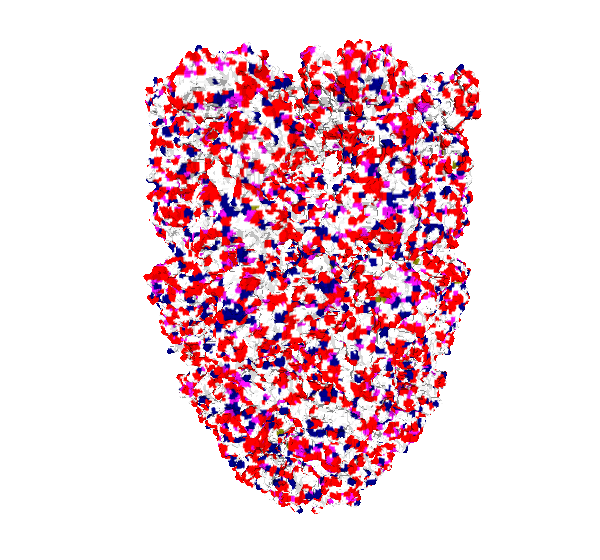
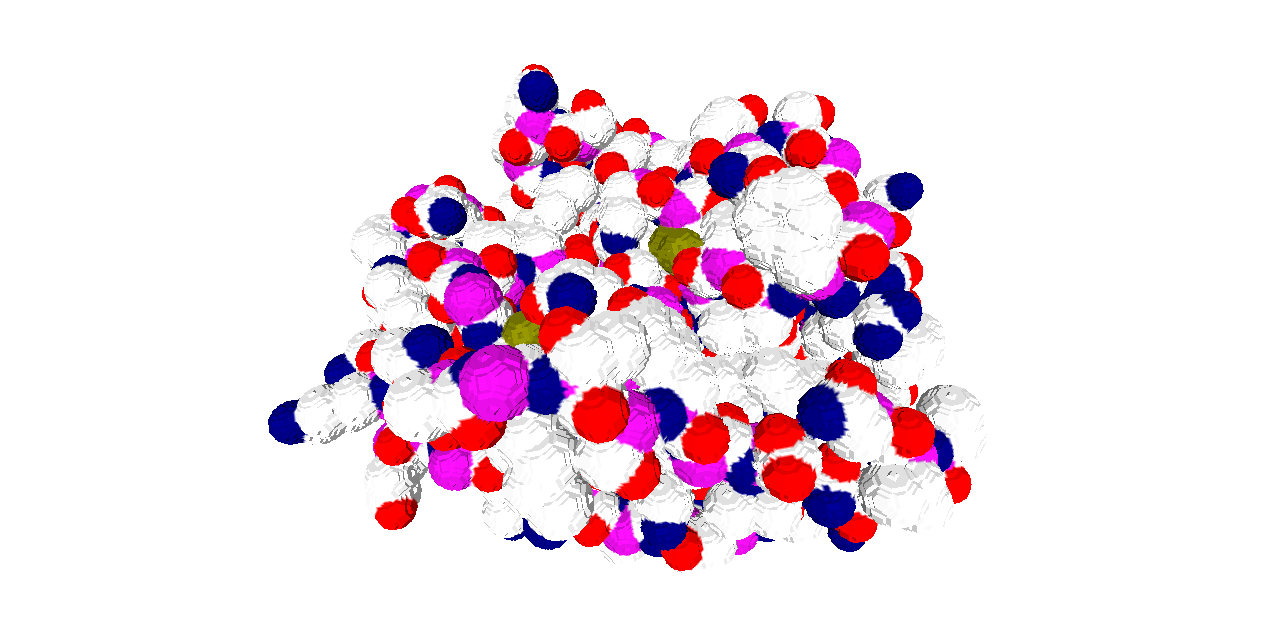
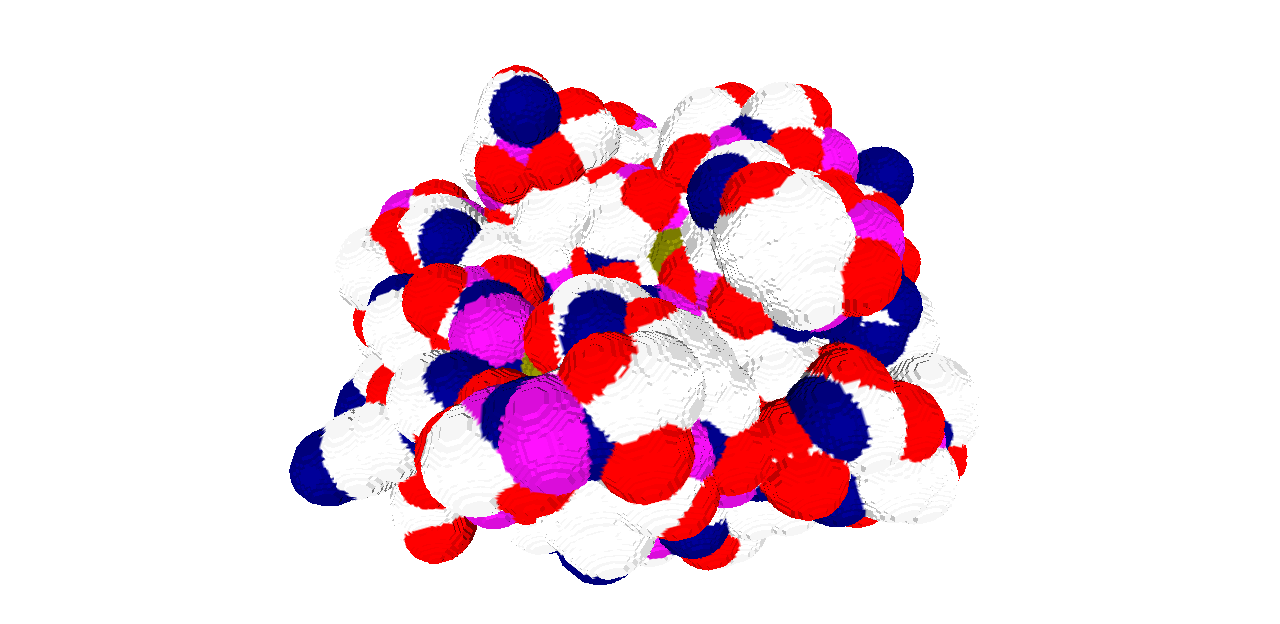
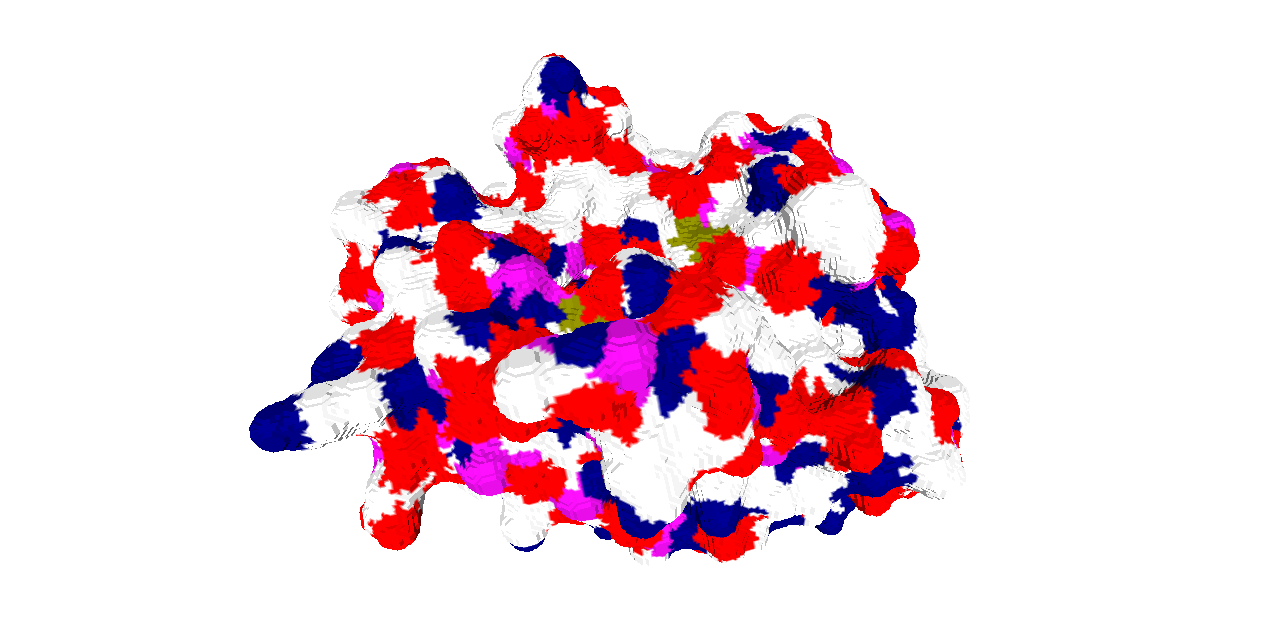
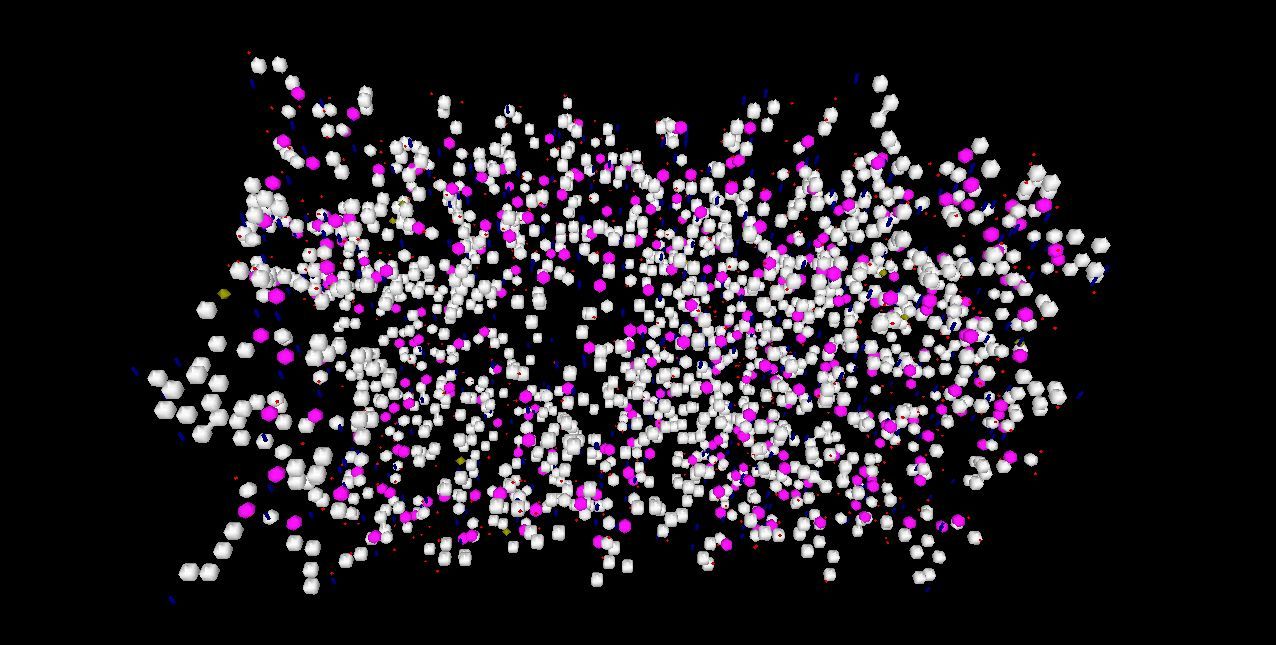
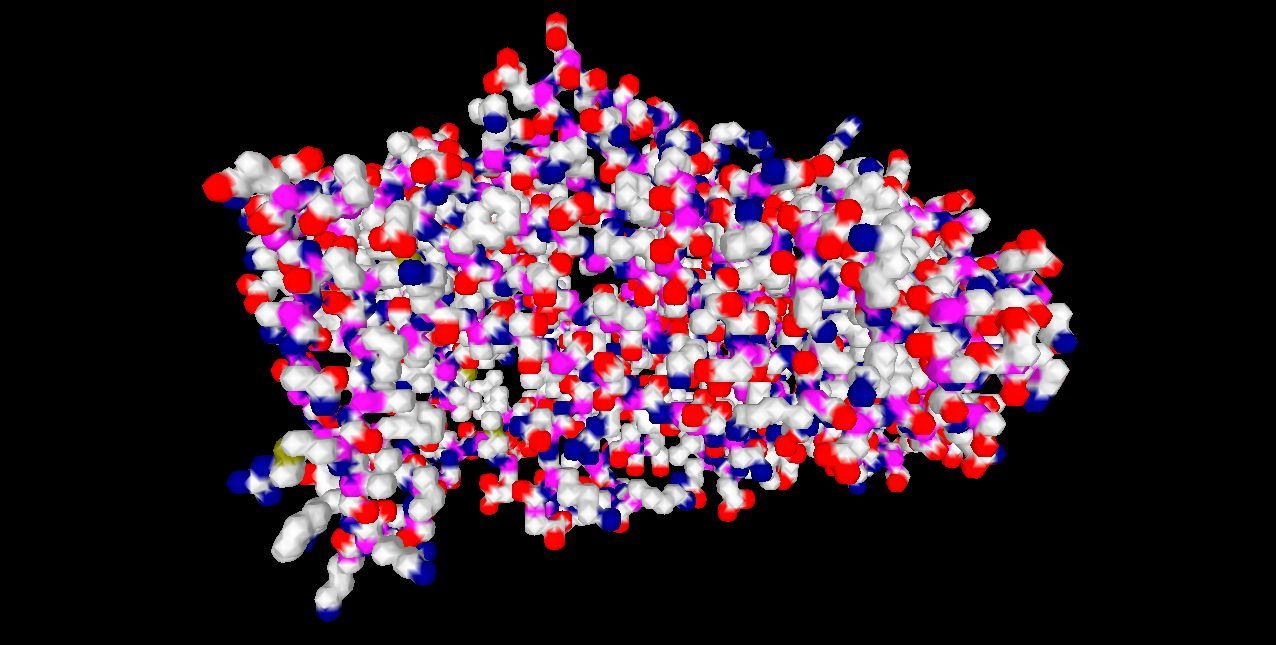
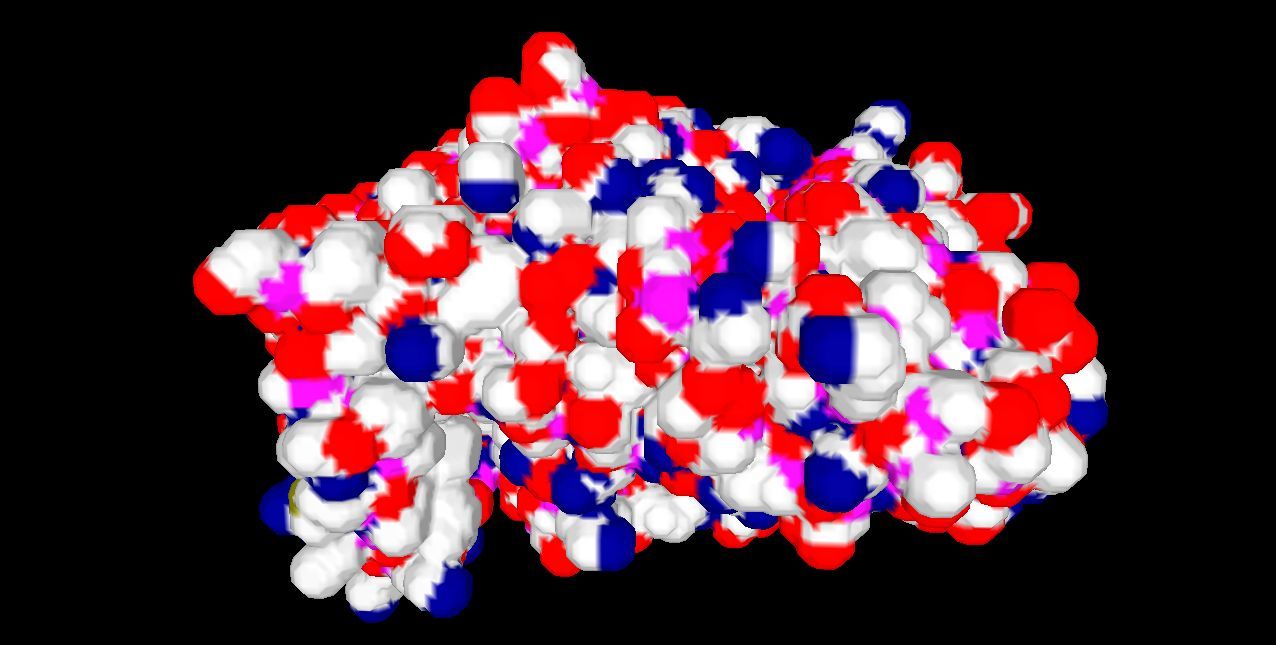
We can output van der Waals surface, solvent-accessible surface and molecular surface in ply format. Each surface can be colored in three different modes-- pure color, color according to atom types and color according to chain types.
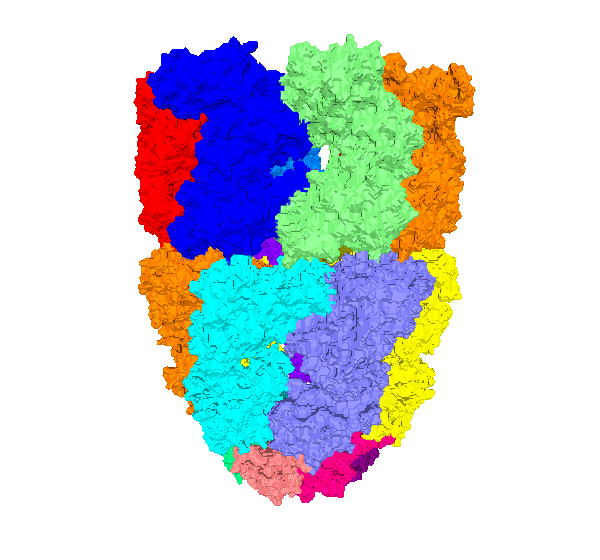
Our cross-platform visualization system--MVP is under developing now. Most of the images in the paper are generated by MVP, which can show various data during or after certain processings.
Ply files also can be viewed by many other open-source softwares freely, such as MeshLab. Here, we give some illustrative figures by MeshLab.
 |
 |
 |
color mode 1 |
color mode 2 |
color mode 3 |
 |
 |
 |
VWS |
SAS |
MS |
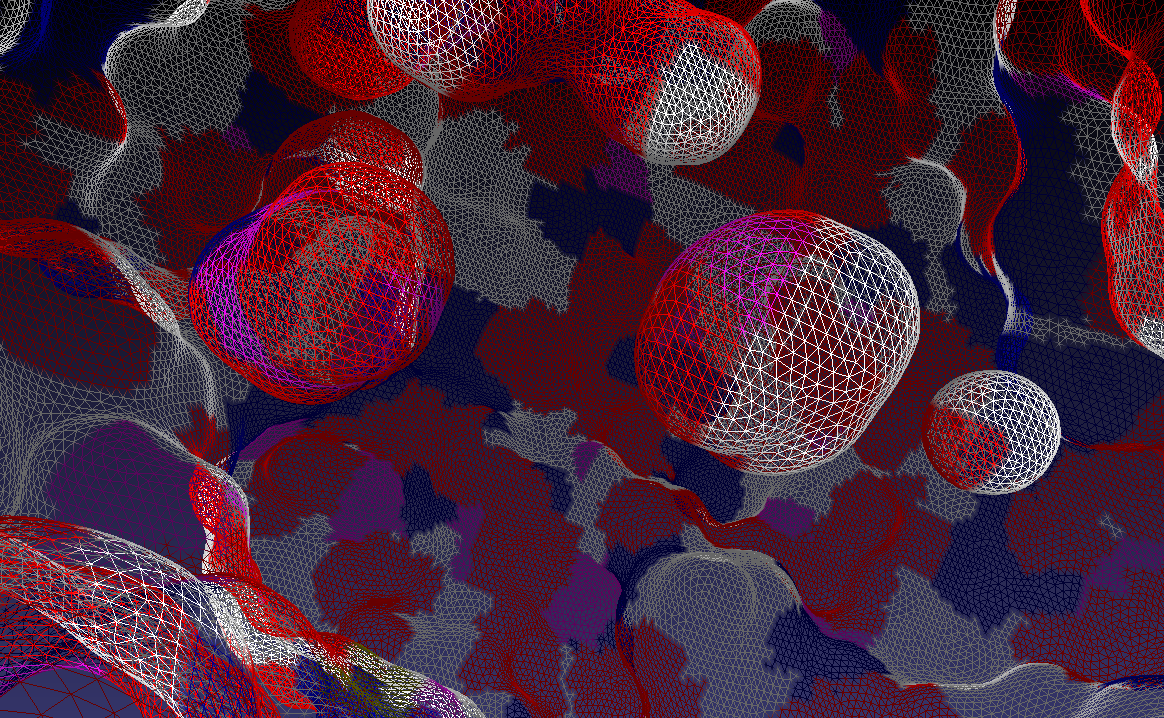
We also add one fast postprocessing feature--Laplacian smoothing to the generated surface. Each mesh point is moved to the centroid of the surrounding mesh points which are topologically connected. Here, you can clearly see the correct connections between vertices which form the mesh surface.
 |
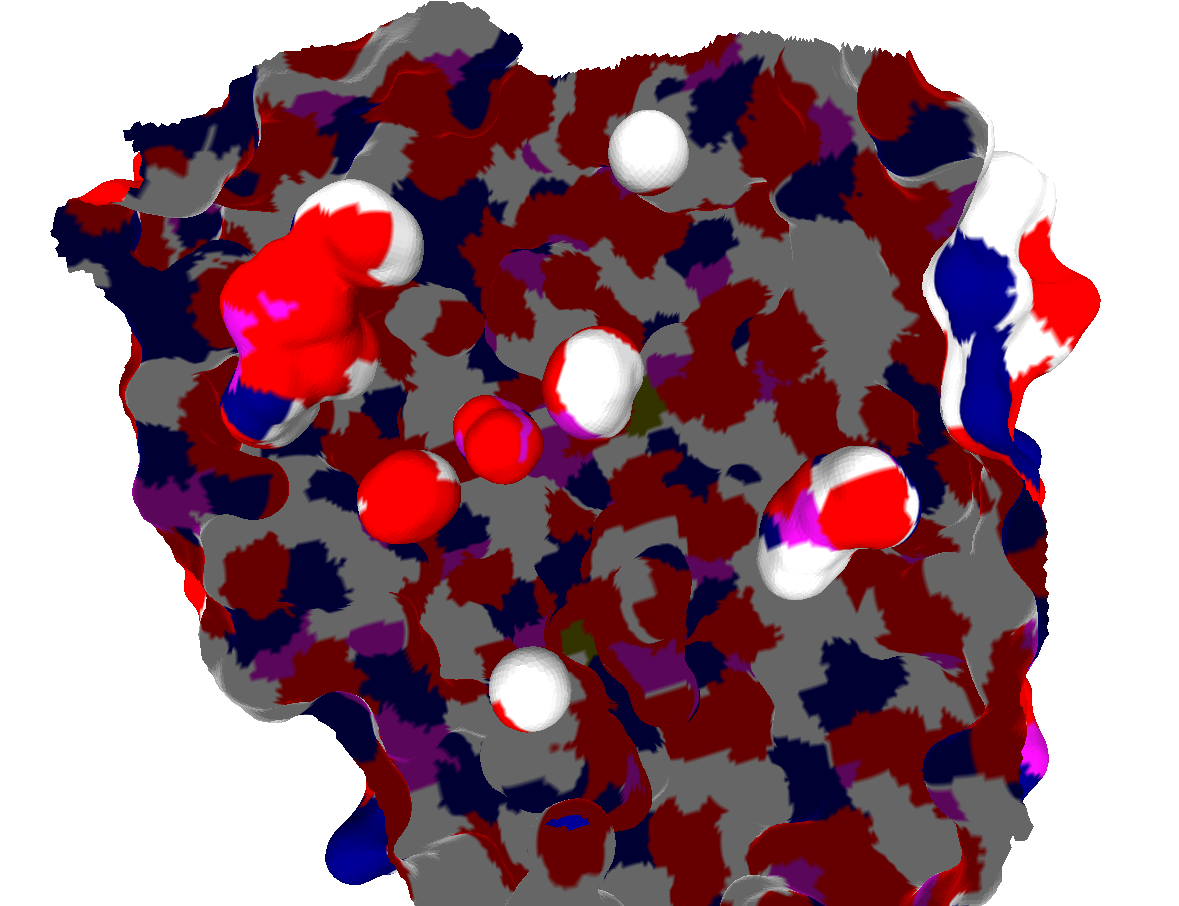
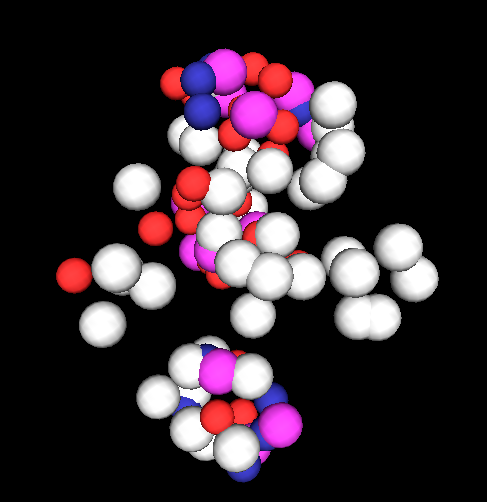
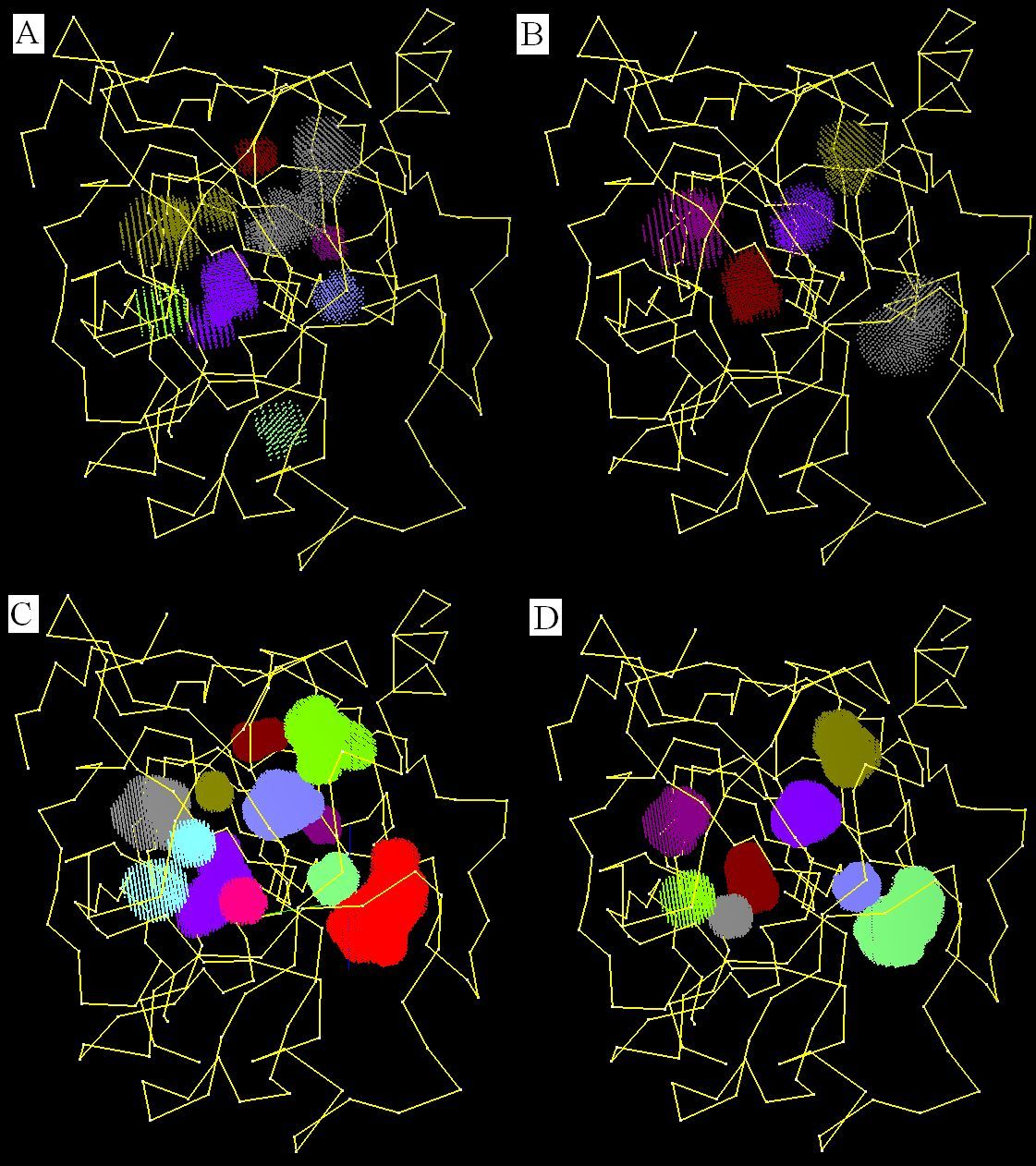
After cutting some outer surface off, the inner cavities can be clearly seen. The atoms surrounding each cavity are saved in pdb format, which can be viewed by RasMol.
 |
 |
Procedure for molecular solid manipulation. (A) and (B) are van der Waals solid and solvent-accessible solid using space-filling method. (C) is EDT to solvent-accessible solid. The outer green part is voxels which have Euclidean distance less than probe radius. (D) is molecular solid.
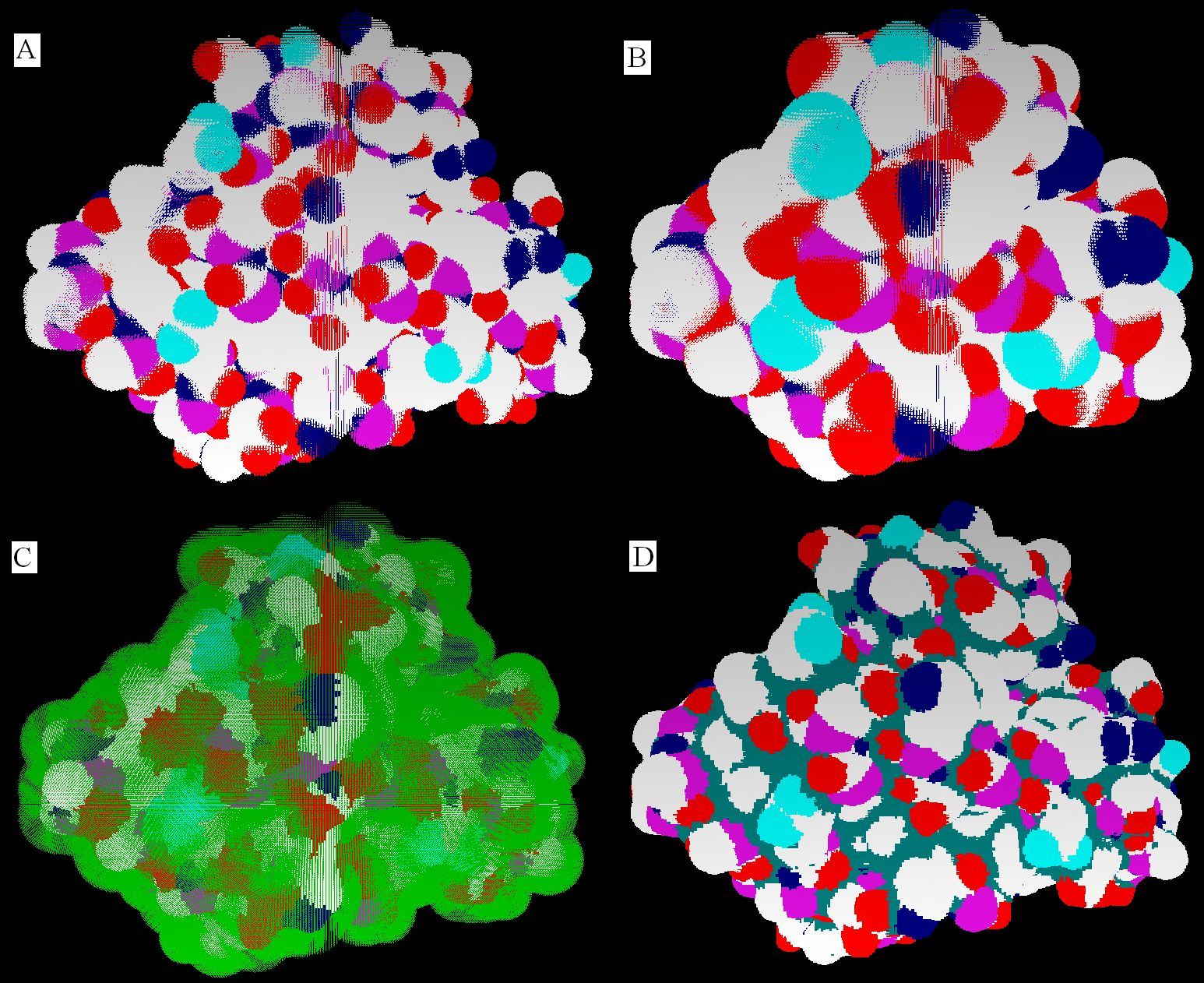
Use EDT theory in the paper, VWS and SAS can be obtained after doing EDT to minimal macromolecular surface and VWS separately.
 |
 |
 |
MMS |
VWS |
SAS |
Cavity number is related to resolution and probe radius. (A) box length 128, probe radius 1.2 angstrom, 8 cavities; (B) box length 128, probe radius 1.4 angstrom, 5 cavities; (C) box length 256, probe radius 1.2 angstrom, 12 cavities; (D) box length 256, probe radius 1.4 angstrom, 8 cavities.
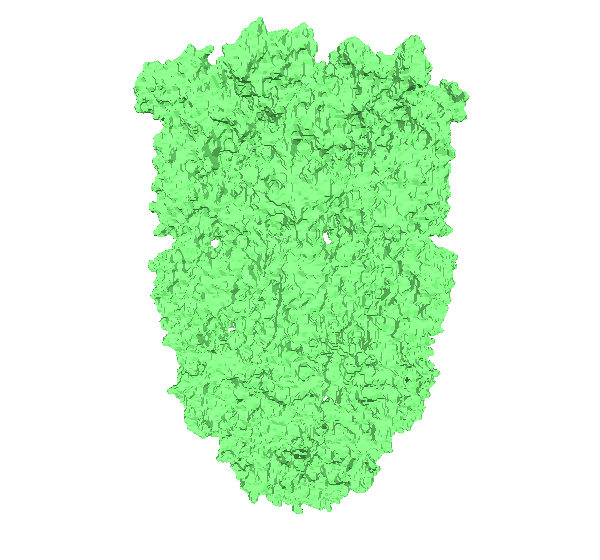
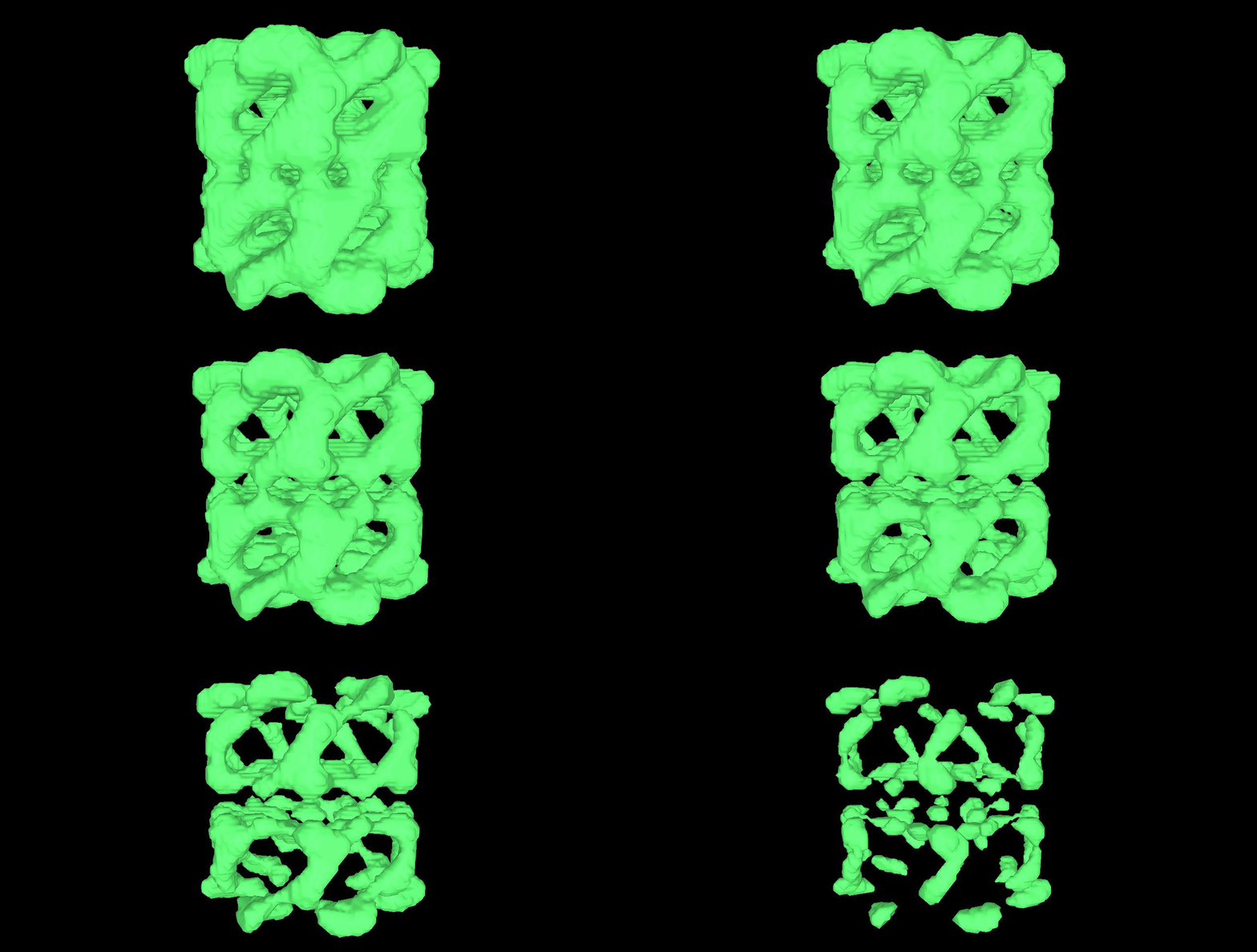
Vertex-connected Marching Cubes can generate triangulated isosurface for Cryo-Electron Microscopy(Cryo-EM) density maps as well.
yangzhanglab umich.edu
| (734) 647-1549 | 100 Washtenaw Avenue, Ann Arbor, MI 48109-2218
umich.edu
| (734) 647-1549 | 100 Washtenaw Avenue, Ann Arbor, MI 48109-2218